
Bacon Dry Cure Quick Recipe
There's a lot of information on this page, the following are the very basics of making dry cure back bacon.
- Buy a pork loin and weigh it in grams
- Calculate the following ingredients: salt (2-4%), sugar (0-3%), curing salt 0.25% (do not change)
- Rub ingredients all over the pork and put in a freezer bag for 8-14 days
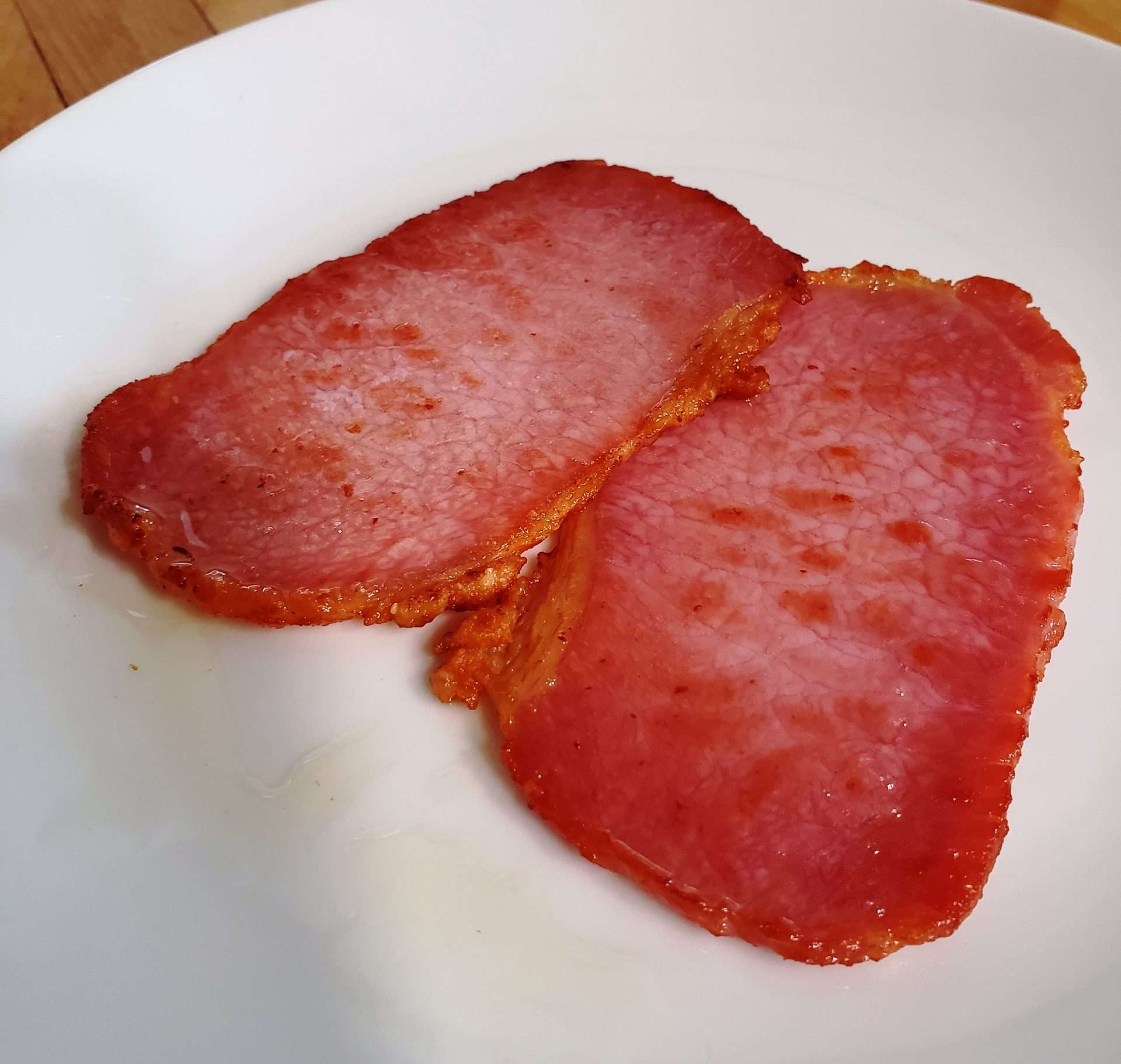
- Rinse the bacon, dry, chill, slice, fry and eat
This method can also be called a dry rub equilibrium method, because when the cure is complete there wil be an equal concentration of the cure ingredients throughout the bacon. But the term equilibrium cure is generally more used when using a wet brine.
If you don't accurately weigh out the cure as recommended and described on this page then it's just dry rub and it's very likely the bacon will be either too salty or not salty enough.
Read the full page for detailed instructions
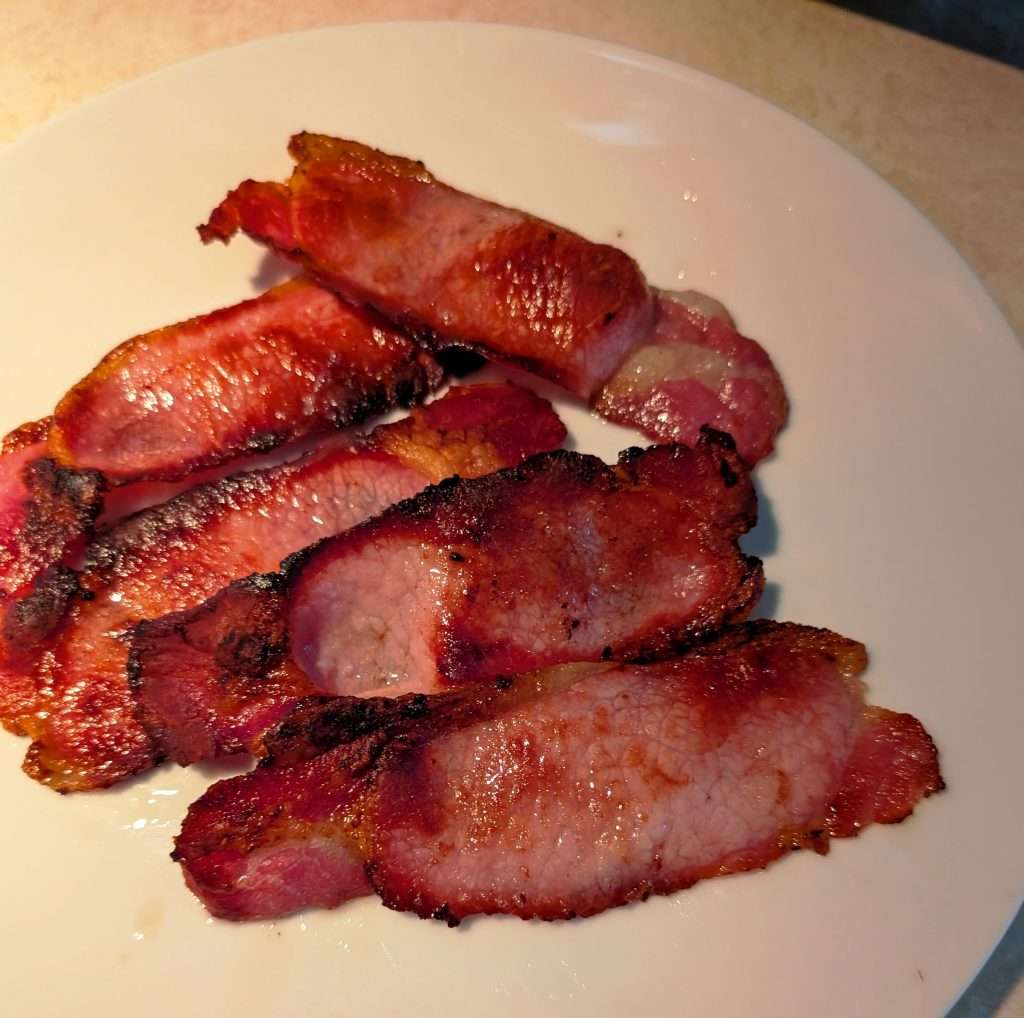
Back Bacon
A little history, mankind has been curing pork to make bacon for thousands of years, at least 3500 years, mainly for preservation purposes. Initially only salt (sodium chloride) was used but later in the middle ages (500 - 1500 AD) it was discovered a better product could be made by adding some saltpetre (potassium nitrate). This improved the look of the bacon (gave the pink color), help preservation and improved the flavor. Bacon was also often smoked to improve presevation and add flavor.

Fast forward to modern times, it was determined that saltpetre was not a safe preservative agent for the mass markets as bacon started to become very popular and there was a transistion to using sodium nitrite and sodium nitrate (note the difference is just the "i" changes to a "a").
Sodium nitrite is generally used for short term cures (days or weeks) like bacon and ham, whereas sodium nitrate is used (along with sodium nitrite) for longer term cures (many months) for harder meats like salarmi as it takes much longer to break down.
For making bacon we only use sodium nitrite, it is used to:
- Help prevent the risk of bolutlisim and baterial growth
- Gives bacon the characteristic pink look
- Enhances flavor
Technically you only need salt to cure pork into bacon and a lot of people don't want to consume nitrites (or nitrate) but it's much safer to use them and there is little risk if used correctly.
In the USA the USDA requires manufacterures to add the label "Uncured Bacon, No Nitrates or Nitrites Added" if no nitrites or nitrates are used in the bacon, this also allows them to use the label "natural" on their packaging, so that it will appeal to the people who want to eat healthy.
However they also don't want to sell bacon to the public without any preservative in it, they don't want the risk!, so rather sneakily they add celery powder to the ingredients. Guess what, celery powder contains sodium nitrite, so you are getting your nitrites anyway, whether you want it or not.
Dry Cure Or Wet Cure?
Traditionally bacon has been made for thousands of years using what is called a dry cure, this is when you simply rub your dry ingredients (salt, sugar, preservatives) over the the raw pork and leave it. It is a good process, works well but is quite labour intensive.
As bacon became more popular in the 18th and 19th centuries a new method was invented called a wet brine cure. In this method the pork is soaked in a brine (made of water, salt, sugar and later nitrites) for several days. The main advantage of this method is that it can be commercialized and is more suitable for making large quantities of bacon. Today this has been taken even a step further where the brine is injected into the pork using fine needles to speed the process up even more. This is why a lot of the bacon you can buy in stores contains up to 15% water.
I use the dry method, I believe it produces better bacon and it is also more convenient as it takes up much less space in the bottom of my fridge.
I should add that a BIG advantage of the dry cure method is that you can control exactly how much salt is in the bacon, if that is a concern of yours. Whereas with the wet brine method you are relying on equilibrium curing and requires much more careful attention to weight, recipes and soaking time to ensure the bacon does not become too salty.
I have tried the wet cure method, but I don't think it's as good as dry cure, you can read about it here wet cure bacon
I should add that I do not smoke the bacon that I make, I never had smoked bacon growing up as a kid. For me it's a lot of extra work I don't want to do and the bacon tastes great as it is, but that is a personal choice, it seems to be more of an American thing!.
Ingredients
To dry cure bacon the exact amounts of cure are dependant on the weight of the pork, but to start with you need to find a "good" pork loin, that is the part of the pig that "back" bacon is made from. When Brits move abroad, in particular to America, one of the 1st things they ask is "where is the back bacon"?, all they can find are these thin and very fatty strips of bacon made from the belly of the pig.
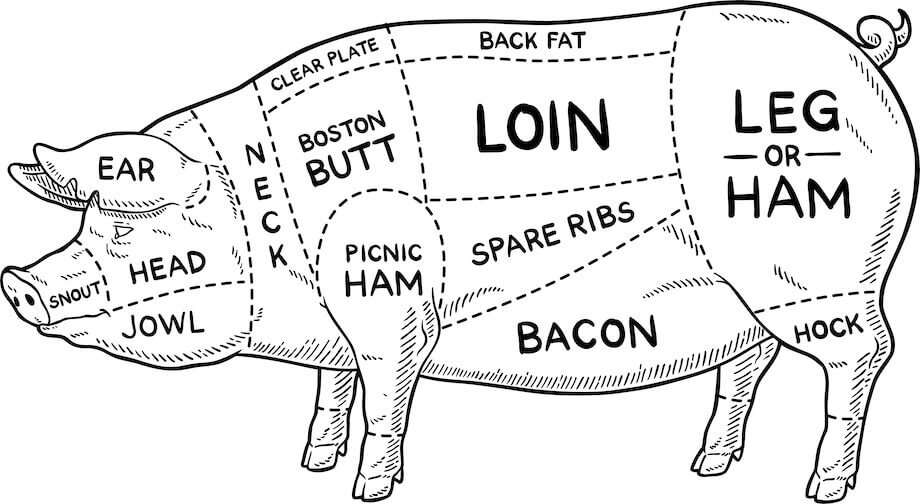
To be honest I find it bit of a mystery, but I think the answer is linked to history and making money, but I could be wrong!. A long time ago, maybe hundreds of years, American butchers decided, when butchering a pig, that they could make more money selling pork chops and pork loins rather than using that part of the pig to make bacon. After all there was the fatty belly of the pig, who wants to eat that?, instead lets make bacon from it, and sell the loin for more money.
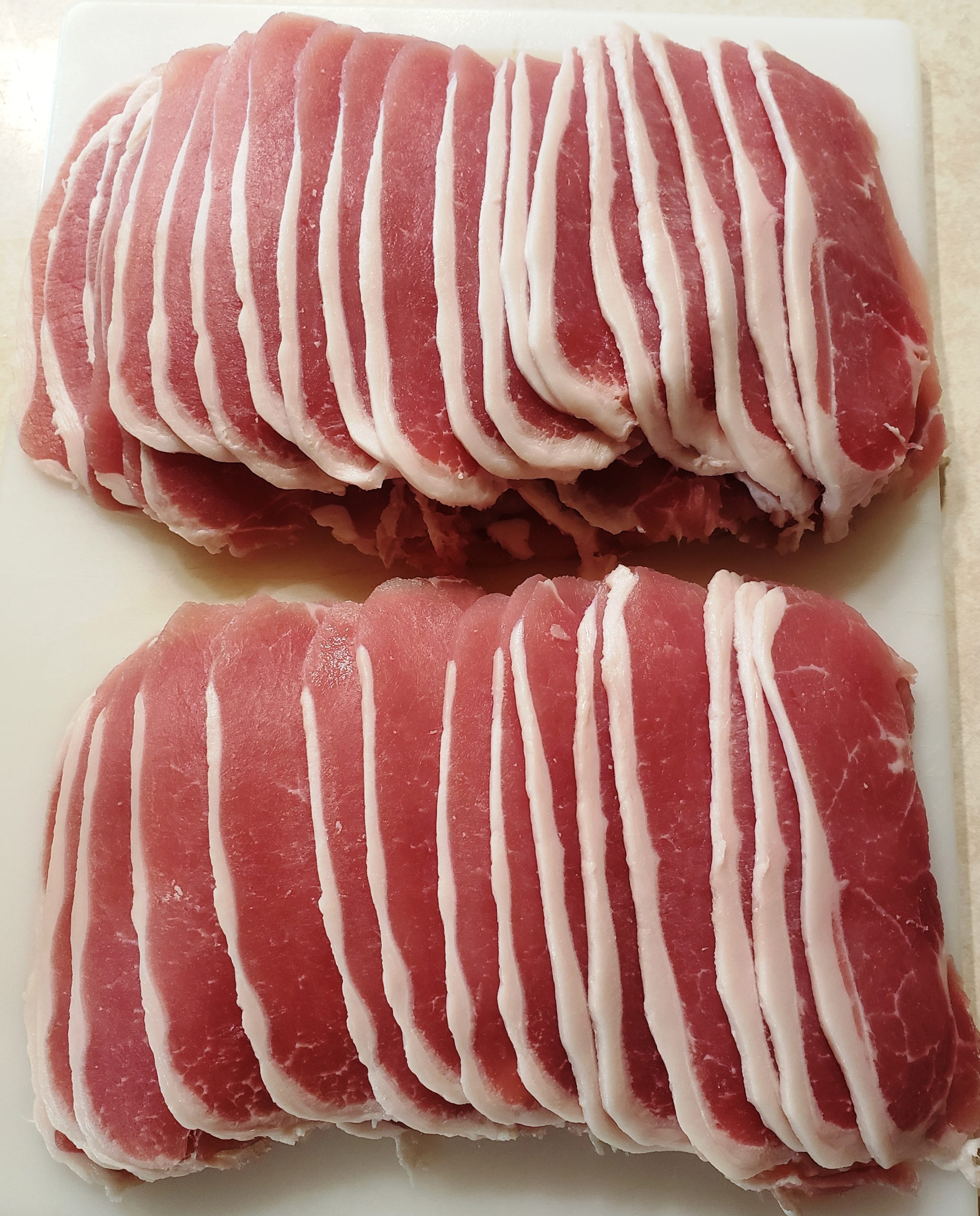
If you look at the image of the pig you can see the loin, and that is where back bacon comes from, it's a long lean piece of meat with some back fat on one side. That is what you need to buy to make back bacon. In the stores they do sell pork loins but they tend not to have a lot of back fat and also do not generally have the thinner piece of side pork that gives the English back bacon it's characteristic shape. The picture below shows the ideal pork loin shape (already sliced) to make back bacon from.

Unfortunatley the picture below shows what you are likely going to find in the supermarket, you can see the extended side piece has been trimmed off.

So the biggest challenge to making real English style back bacon at home is finding the right cut of pork, it requires that you search though the pork loins in the supermarket and find the best one. Occasionally you can find one with a good fat cap on one side and some of the side has been left on. However even if you can't find a really good pork loin with the side piece attached, which will be most of the time, you can still make really good back bacon.
So to make the back bacon, using the dry rub method, you will need:
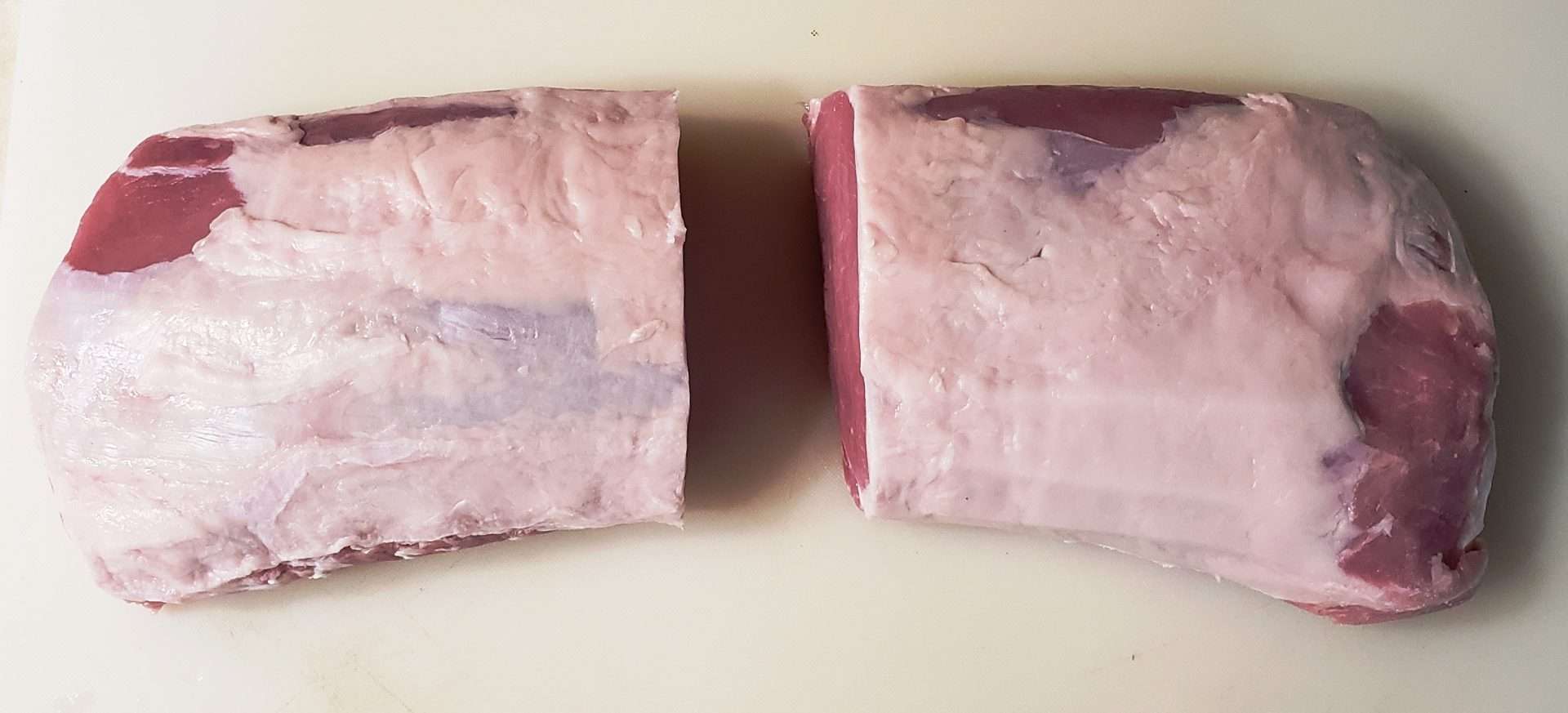
- The best pork loin you have found (ideally 4-5 lb)
- Table Salt
- Sugar (white or brown)
- Pink Salt
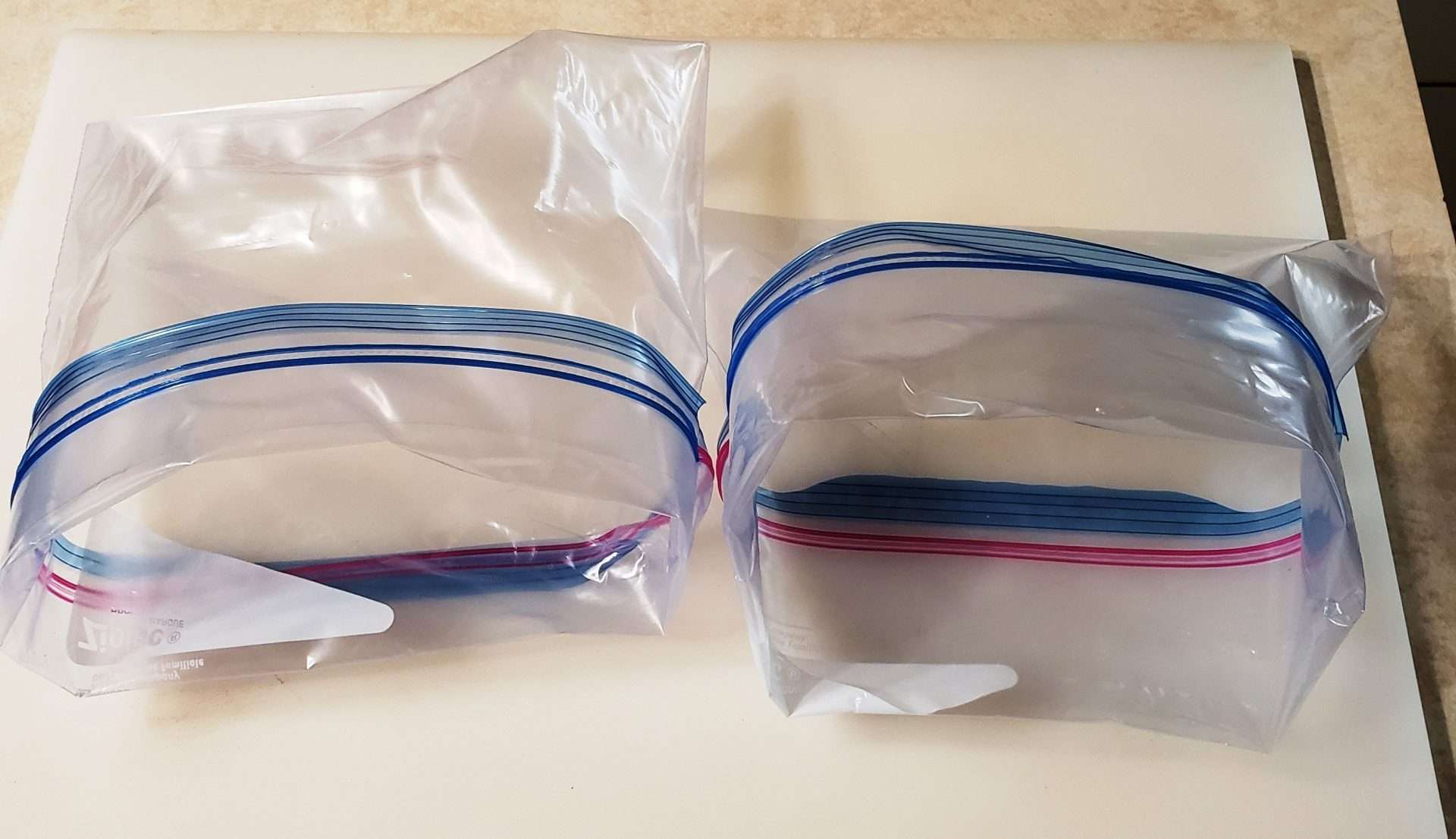
- Some 1 gallon freezer bags
- A plastic container, with lid, approx 12x9x4 inches
Method
Making the bacon using the dry rub method is very easy, here are the steps:
- Weight the pork loin, if you have bought a 4-5 lb. loin it's much easier to cut it in half so each piece will be about 2-2.5 lb. (or approx 1000 grams).
- Using the calculator below, for each piece, calculate the amount of salt, sugar and pink salt required, mix well.
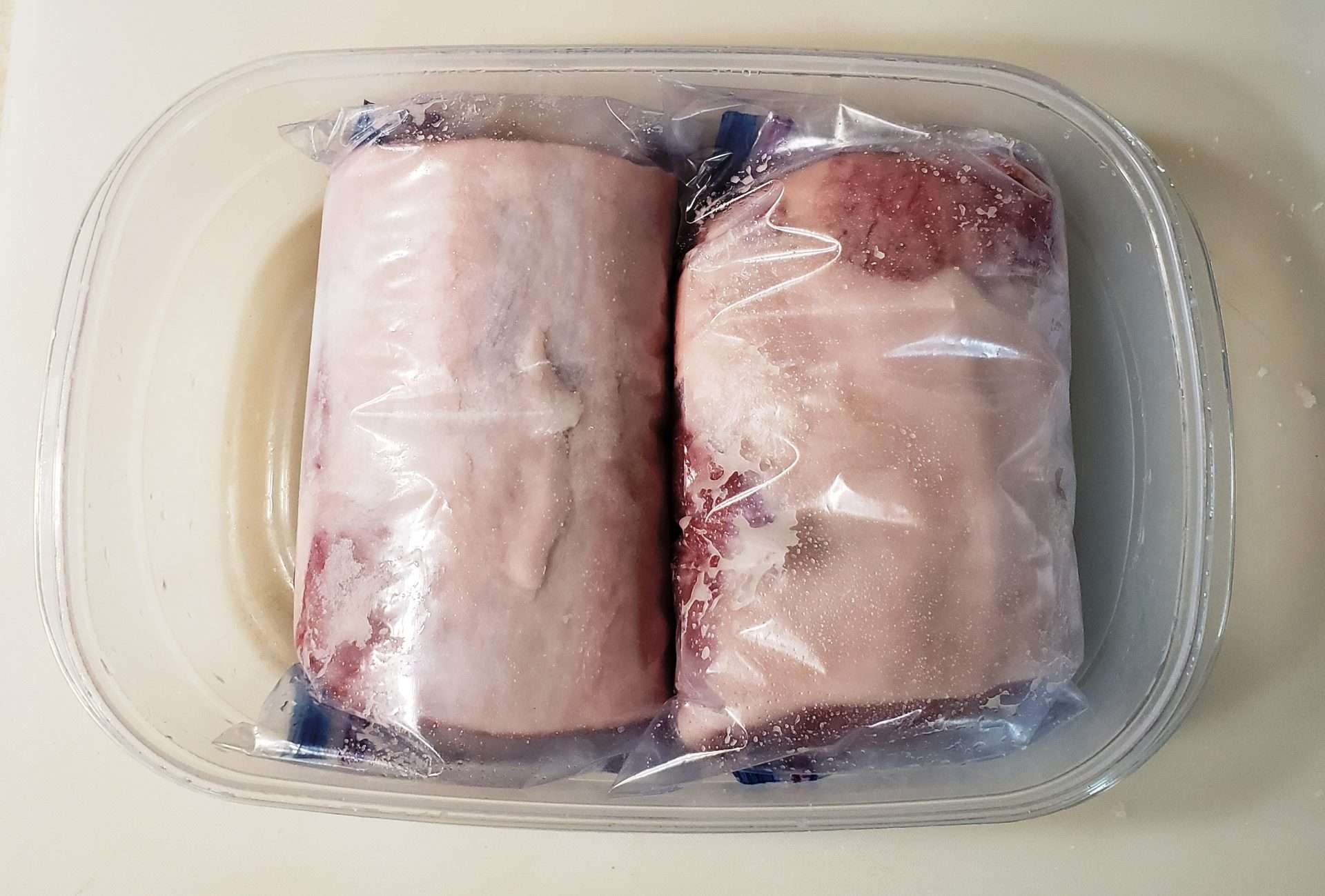
- For each piece of pork rub the mixture well on all sides then put into a 1 gallon freezer bag. A 1 gallon bag works well up to about 3 lb., that's why I usually cut them in half. If any of the mixture has fallen off make sure that you add it back into the bag, you want to make sure all the measured dry rub is used.
- Squeeze out as much air as possible and seal the bag. Put bag into a plastic container with lid, put it in the bottom of your refrigerator. Liquid will be released by the pork and you can't really trust the bags not to leak, that's why you should always used a container.
- The pork will very quickly start to produce some liquid, every day turn the pork over and gently squeeze the bag to redistribute the liquid around the pork. This is why it's not that critical exactly how evenly you apply the rub, it all gets mixed up and evenly distributed during the curing process.
- There is a rough rule of thumb about how long to cure the pork. The rule is 1 day for every 1/2 inch plus 2 days. So for example if your pork loin is 3 inchs thick that would be 6+2= 8 days. So for 8 days you turn the bag over as described above. In my opinion this would be the minimum time, there is no downside to letting it cure longer, within reason, but you definitely do not want any uncured pork in the middle of the joint. So I usually let it cure for about 10-14 days.
- At the end of the cure period the pork is now bacon!. Remove from bag and wash in cold water, pat dry with paper towels. The bacon is now ready to eat and you could cut a slice off and test if you want to.
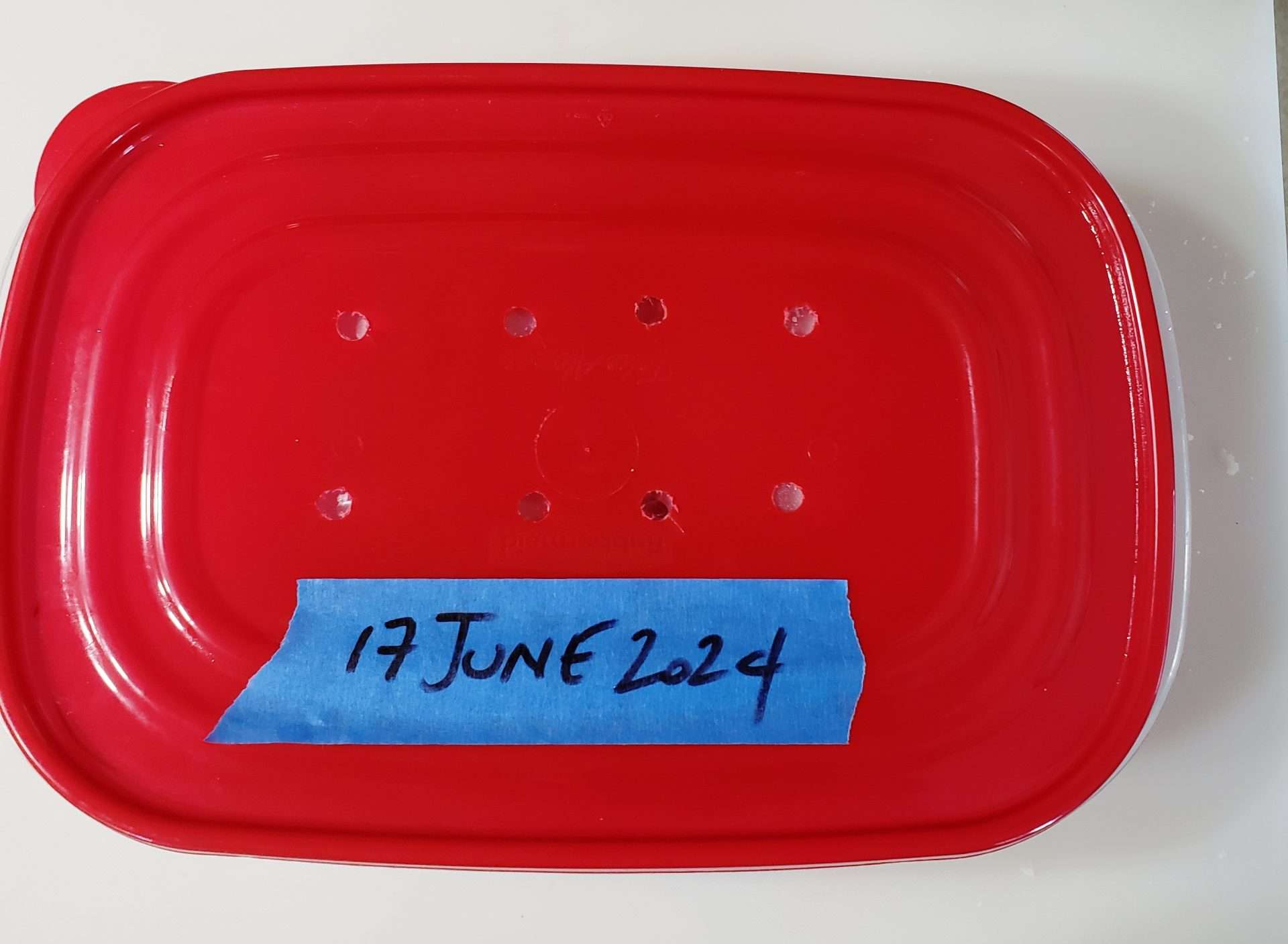
- I like to return the washed and dried bacon back into the fridge for several days to "dry off", in the olden days I believe they hung the bacon on hooks to do this. I believe this drying period removes a few % of water and intensives the bacon flavor. I do this by using the same plastic container, but the lid has a bunch of holes drilled in it, this allows air to circulate and water to evaporate.
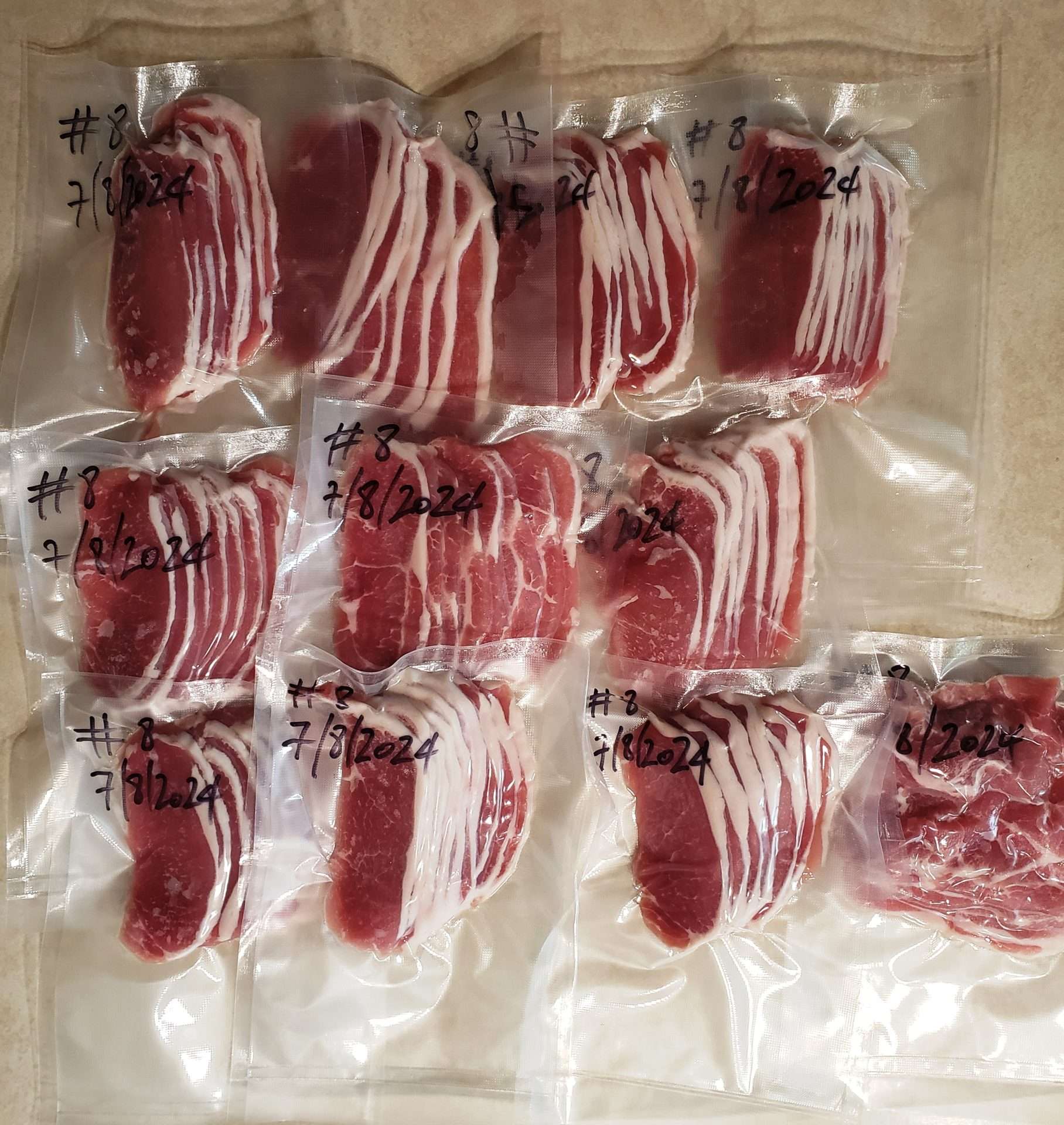
- After the drying period I usually slice up all the bacon and vaccum seal into about 8 oz. portions, this is usually about 8 slices. I always use a marker to date the bags, and also with the batch number as occassingly I will slightly adjust the salt and sugar %, and I want to know if the taste has improved or changed etc.
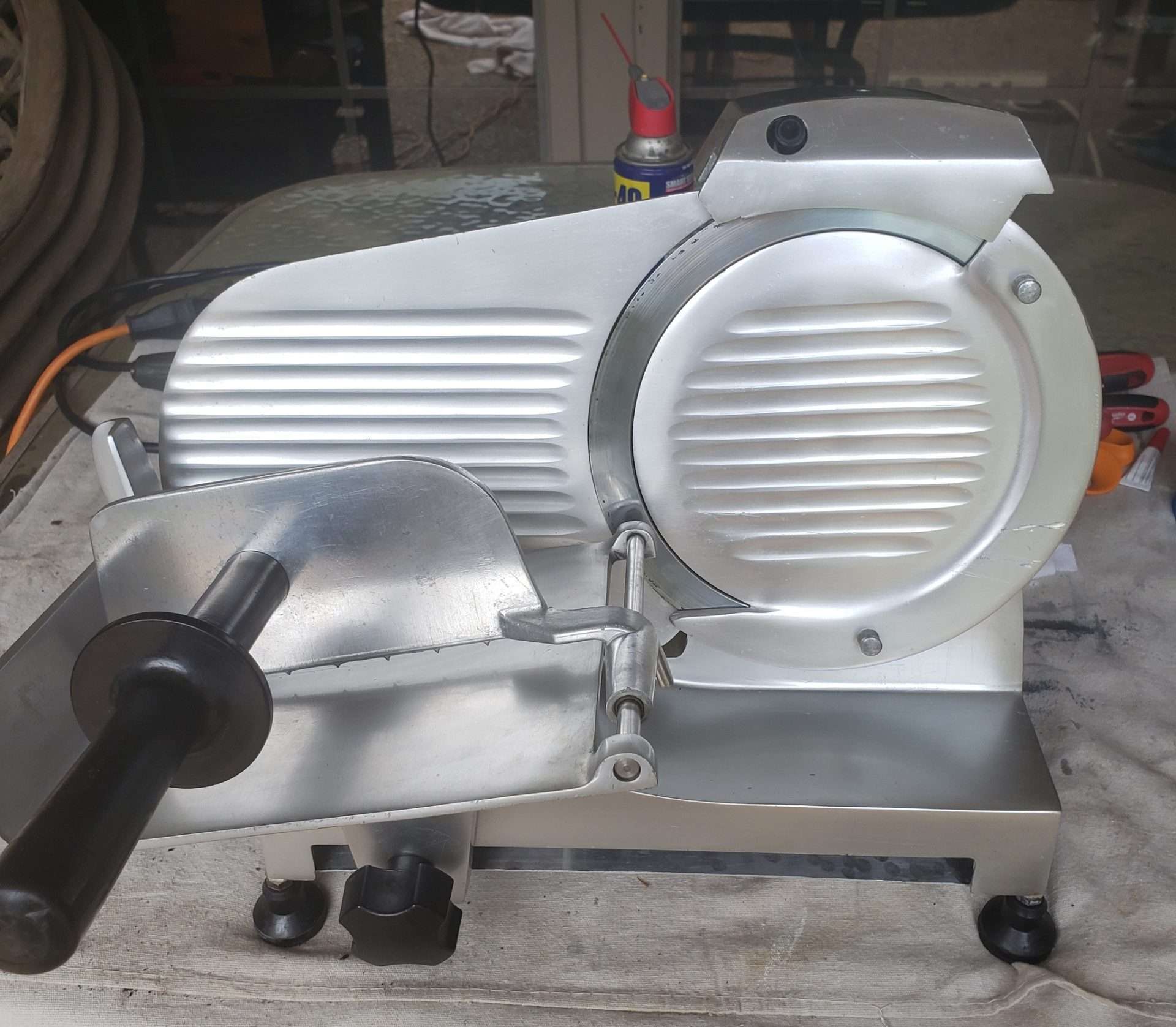
To slice the bacon it's best if you make sure that it is well chilled. You can slice just using a sharp butchers knife, but it is much better to invest in a bacon slicer if you think you will be doing this on a regular basis.
I bought a used meat slicer off Facebook marketplace for $200, after a good clean and sharpening it works like new, I'm very happy with it, was a good investment.
I have stored the vaccum sealed bags in the freezer for at least 8 months and they are still perfect, of course they may not last that long!.
After slicing I usually end up with about 8 oz. of "scraps", not full slices etc, of course nothing goes to waste, this is perfect for making a bacon egg and cheese quiche, which is one of my favorite things to make.


Cure #1 (Pink Salt)
I think it's worth talking a little about "pink salt", it's pretty important in this process. The preserving agent that I use is sodium nitrite. When you buy this it is always cut down with common salt and then called by a number of different names:
- Pink Salt
- Pink Curing Salt
- Cure #1
- Insta Cure #1
- Prague Power
But they are all the same, and they should all be made to the same formula, which is:
6.25% sodium nitrite
93.75% table salt (sodium chloride)
Typically 0.25% of pink salt is used, if you do the maths using the above numbers the sodium nitrite content comes to 156 ppm, which is perfectly safe.
The reason it is called "Pink Salt" is because both sodium nitrite and common salt are white, so the manufacturers add a food safe red dye to the mixture to try and make sure that you don't get your bacon preservative mixed up with your regular table salt, you would not want to be sprinkling it on your chips!
Also note that himalayan pink salt is completely different, basically just salt, and should not be used thinking it's a nitrite based preservative.
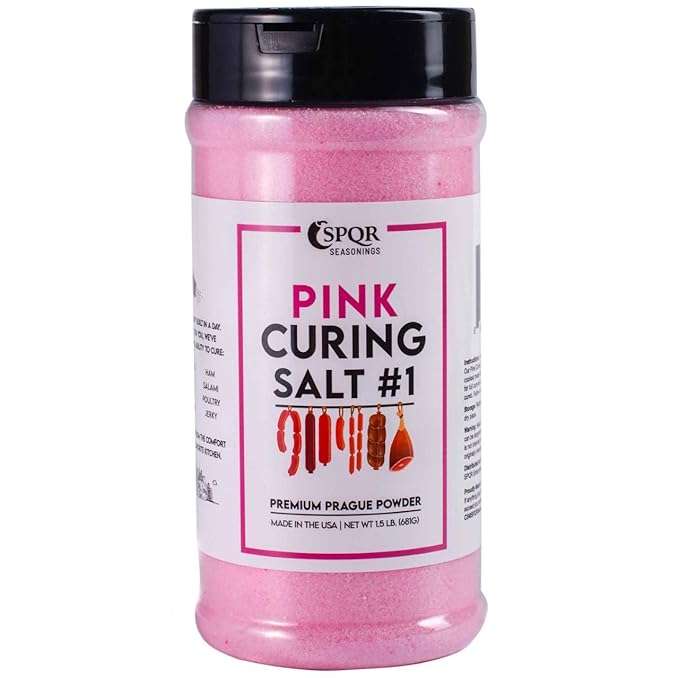
The container above contains 681 grams, given that you only need 2.5 grams per 1000 grams of pork (or just over 2 lb.) this is enough to cure approx 572 lb. of bacon, so don't buy a bigger bottle, this is probabily enough for a life time of curing bacon.
Dry Rub Calculator
You can use the calculator below to calculate the weight of the dry rub ingredients. Just enter the weight of your pork loin, the calculator is preset with the values that I normally use. The salt % is usually between 2 and 4, 2.5% is commonly quoted but I have found that I prefer 3.5%.
Aftering entering your values hit Calculate, hit Reset if you want to try again
The sugar % can be changed to your preference but 1% is commonly used, the sugar offsets the salt taste, it's a personal preference, and you can use either white or brown sugar. The % for cure #1 (pink salt) should not be changed, this ensures that the ppm of nitrites does not exceed the USDA guidelines of 200 ppm. Grams are used because it is much easier to calculate the exact amounts required rather than trying to use oz.
Bacon Curing Calculator For Dry Rub
Dry Rub Ingredients:
Table Salt: 0 g
Sugar: 0 g
Cure #1 (Pink Salt): 0 g
Note
For the purists out there, if you want to know the exact % of salt in your homemade bacon you will need to add the salt in the pink salt to the salt in the main salt.
So for example using the default values, the exact amount of salt in the bacon is exactly 3.7344% and not 3.5%, I'll leave the maths as an excercise for the reader!.
So if you do not want to exceed 3.5% total salt content then reduce the salt % by approx 0.25% to 3.25% and that will take into account the salt in the pink salt.