
Homemade Bacon - Wet Brine Cure
There are 2 main ways of making bacon, both suitable for making bacon at home on a small scale:
- Dry Cure (can be equilibrium or just a dry rub)
- Wet Cure, which is also known as the wet equilibrium method
The dry cure method is covered in some detail on this page: dry cure bacon and a lot of the general information also applies to the wet cure method, so it's worth reading.
Wet Cure Method
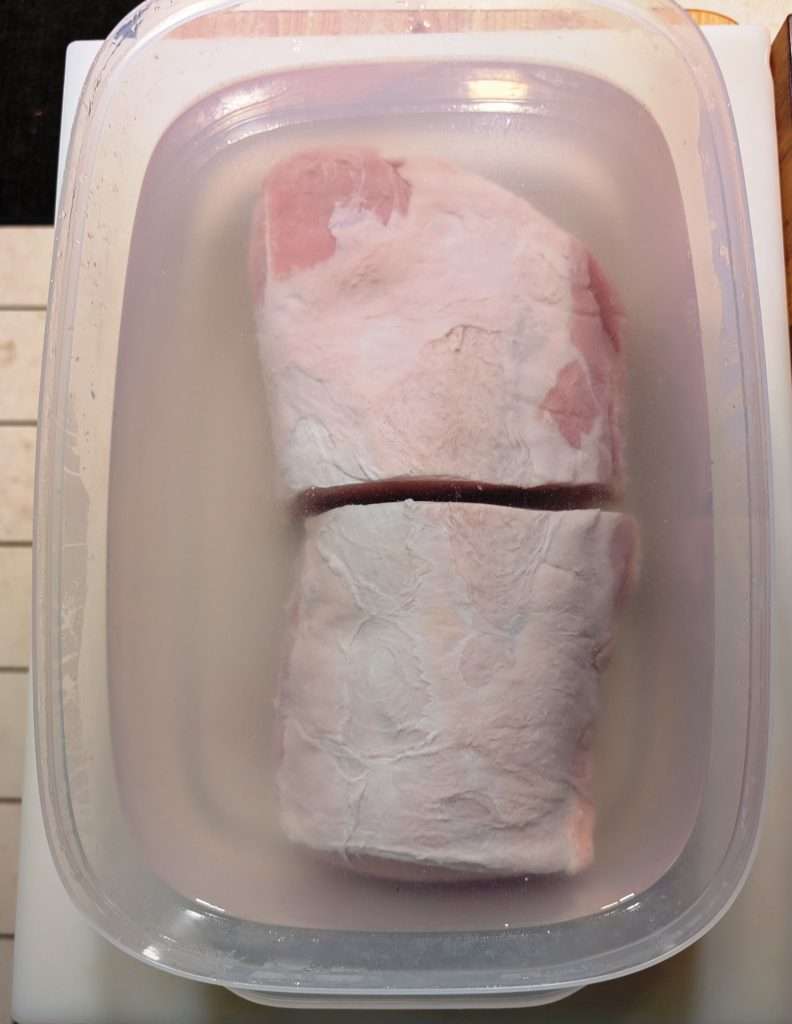
The basics of this method is that the pork is completely submersed in the curing solution and left for several days. The same ingredients are used as in the dry cure method, but the difference is that they are calculated using the combined weight of the pork and the water. When the pork is fully cured the salt content of the pork will be the same as that for the water, they will be equal, hence the name equilibrium method. It's the same for the sugar and pink curing salt as well, they will also be at the same concentration.
So it's very important to weight the pork and use a known weight of water when calculating the salt, sugar and curing salt amounts. The same % numbers can be used as for the dry cure method.
If the same % amounts are used the finished bacon should be very similar regardless of which method is used, althought the dry cure method will be a little less moist.
The lenght of the cure required will mainly depend on the thickness of the pork joint, obviously you need to allow enough time for the brine solution to penetrate all the way through to the center. Generally speaking you will need 5-10 days, although some people have said it only take 2-4 days and is fine.
It is better to be on the side of caution because the last thing you would want is to cut the cut in half and discover it is not fully cured at the center.
A good rule of thumb is to allow 1 days per 1/2 inch plus 2 days, so a 3 inch think pork loin would need 8 days.
At the end of the cure the bacon should be well rinsed in cold water, patted dry with paper towels and left to dry out for several days in the fridge.
Before slicing it's best to chill the bacon down in the freezer for 15-30 minutes as this makes it easier to slice.
If the bacon is too salty, which seems to be a common complaint, it's because the incorrect amount of salt was calculated, too much salt was used. The next time reduced the amount of salt used and make sure that you weigh the pork and water correctly.
Washing the bacon at the end of the cure in cold water may reduce the salt slightly but it's not going to change the saltiness of the inside.
A mistake a lot of people seem to make if it is too salty is to reduce the lenght of the cure, this is completely incorrect, you want the cure to be long enough so that equilibrium occurs, that is the whole point of this method. Trying to adjust the saltiness by changing the curing time is like trying to caught a falling knife.
Ingredients
| As a % of the weight of the pork and water | |
| salt | 2.75 (2-4%) |
| sugar | 2.0 (0-3%) |
| cure #1 (pink salt) | 0.25 (do not change) |
Notes
- You can use either white or brown sugar
- When measuring the water 1 ml = 1 g
- in the table the commonly used ranges for salt and sugar are shown, this is a personal preference, you must not use more than 0.25% of cure #1 or you will be exceeding the recommended pppm of sodium nitrite
Conclusions
I have made bacon both ways, dry rub cure and wet cure (aka equilibrium method). Both methods can make good bacon providing you follow the process correctly and also that you carefully measure the ingredients.
But on balance I think the dry rub cure produces better bacon, has a better taste and texture, in addition the dry rub bacon has a better pink colour.