
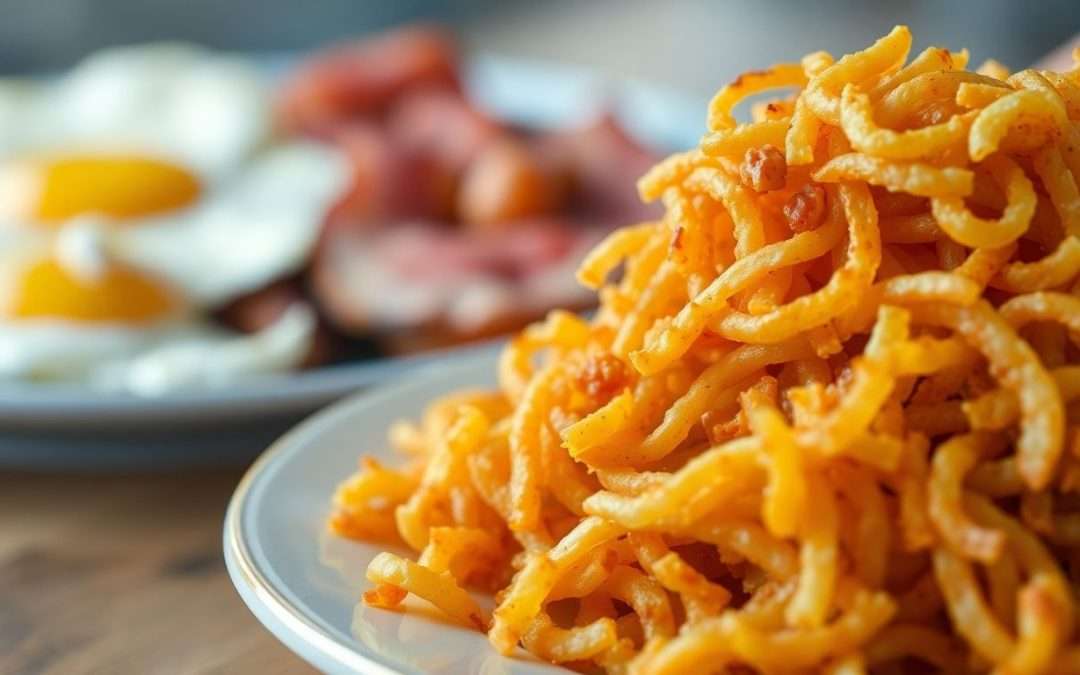
A culinary debate is simmering across Britain as the English Breakfast Society has called for the removal of hash browns from the traditional Full English breakfast. The group advocates for the return of ‘bubble and squeak’ as a more authentic accompaniment, sparking a lively discussion about the evolution and true identity of this beloved national dish.
Key Takeaways
- The English Breakfast Society argues that hash browns, popularized by fast food chains, are not a traditional component of a Full English.
- They propose replacing hash browns with ‘bubble and squeak,’ a dish made from leftover vegetables and potatoes.
- While some agree with the society’s stance, public opinion and food experts remain divided on the issue.
The Case Against Hash Browns
Guise Bule de Missenden, founder of the English Breakfast Society, stated that the inclusion of hash browns is a sign of declining respect for tradition. He believes that these reconstituted potato products, popularized by McDonald’s, have no place alongside classic Full English ingredients like sausages, bacon, eggs, beans, tomatoes, and mushrooms. The society’s campaign, under the hashtag #BringBackTheBubble, aims to reinstate bubble and squeak as the preferred potato-based element.
A Traditionalist’s View
Food journalist Felicity Cloake echoed some of these sentiments, noting that hash browns, being already crisp and oily, cannot effectively soak up the breakfast’s grease as well as softer, starchier options like bubble and squeak or fried bread. She suggests that while hash browns might be a newer addition, the Full English has a history of absorbing new elements, citing the integration of baked beans.
Public Opinion and Historical Context
Despite the English Breakfast Society’s strong stance, a 2017 YouGov poll indicated that 60% of the British public considers hash browns to be an important part of their ideal Full English. This highlights a significant divide in perception. Historically, the Full English breakfast as a concept is believed to have emerged in the 1930s, gaining institutional status after World War II. Hash browns, or ‘hashed brown potatoes,’ have been known since the Victorian era but became a breakfast item more prominently in the 1980s, likely influenced by fast-food offerings.
The Debate Continues
Social media reactions reveal a mixed bag of opinions. Some defend hash browns as a delicious and convenient accompaniment, while others lament the perceived dilution of tradition. The debate underscores the subjective nature of culinary traditions and how beloved dishes continue to evolve, sparking passionate discussions among food enthusiasts.