
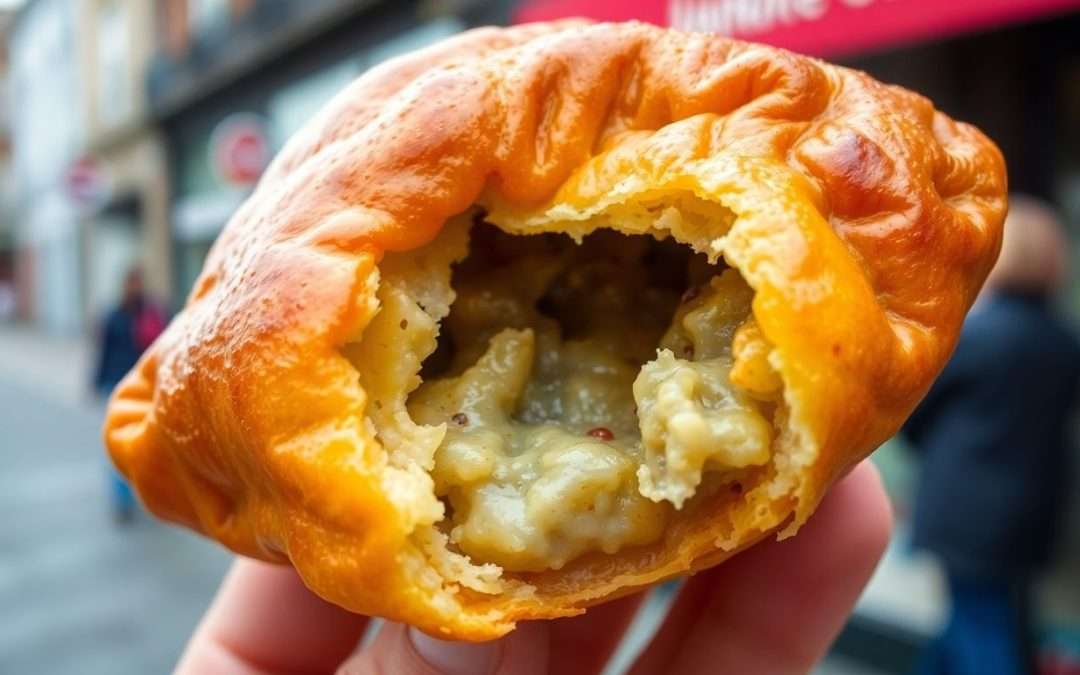
A Londoner’s maiden voyage into the world of authentic Cornish pasties has resulted in a culinary critique, revealing a surprising disconnect between expectations and reality. While the pastry itself received praise for its texture and generous filling, the absence of expected vegetables and a desire for a juicier, more seasoned interior left the reviewer on a continued quest for the perfect pasty.
Key Takeaways
- The pastry was praised for being thick and golden, not hard.
- The beef filling was noted for substantial chunks rather than a mushy consistency.
- A lack of expected vegetables (like swede) was a point of contention.
- The filling was described as slightly dry and a tad bland.
A Londoner’s Pastry Pilgrimage
For many Londoners, the "Cornish pasty" often conjures images of supermarket offerings or chain bakery versions, which can be a mixed bag of mushy meat and random vegetables. This particular reviewer, accustomed to these less-than-authentic renditions, embarked on a mission to experience a true Cornish pasty during a visit to Plymouth.
The Cornish Bakery Experience
Despite initial apprehension about the modern appearance of the "Cornish Bakery," the establishment assured the reviewer that their pasties hailed directly from Cornwall. The order included a classic Cornish pasty, a hot chocolate, and a pain au chocolat. While the hot chocolate and pain au chocolat were met with delight, the main event, the Cornish pasty, presented a more nuanced experience.
Authenticity and Expectations
The pastry was lauded for its beautiful golden hue and satisfying thickness. The filling impressed with its large chunks of beef and potato, a significant improvement over the reviewer’s usual pasty encounters. However, a key element of the traditional Cornish pasty, according to the Cornish Pasty Association, is the inclusion of yellow-fleshed swede. Its absence was noted, as was a preference for a juicier filling and more seasoning, which the reviewer felt was lacking.
The Quest Continues
While acknowledging that the pasties in Plymouth were "scrumptious," the reviewer concluded that their search for the ultimate Cornish pasty is far from over. The experience highlighted the specific criteria that define an authentic Cornish pasty and how these can differ from common perceptions, particularly for those outside the region.
Crafting an Authentic Cornish Pasty
For those inspired to create their own, the Cornish Pasty Association offers guidance. The traditional recipe involves a robust shortcrust pastry made with lard or shortening and Cornish butter. The filling is a simple yet crucial mix of good-quality beef skirt, potato, swede, and onion, seasoned with salt and pepper in a 2:1 ratio. The method emphasizes developing an elastic dough and carefully layering the ingredients before baking to a golden brown.
Sources
- I ate a Cornish pasty for the first time in the South West, Cornwall Live.
- I’m a Londoner and I ate my first authentic Cornish pasty — it could be better, Daily Express.
- I tried a ‘real’ Cornish pasty for the first time in Plymouth and as a Londoner it wasn’t what I expected –
Plymouth Live, Plymouth Live.